AM I AI?
A speculative design project exploring the blurred lines between AI-generated and original content in the age of fake news. Through provocative visual branding, merchandise, and motion graphics, the project questions authenticity, digital literacy, and how we discern truth in algorithmically mediated realities.
Role
Visual Designer (Motion Design & Poster Design)
Team
3 Designers (collaborative worldbuilding & branding)
Duration
3–4 months (Semester Project)
My responsibilities:
– Visual identity & branding development
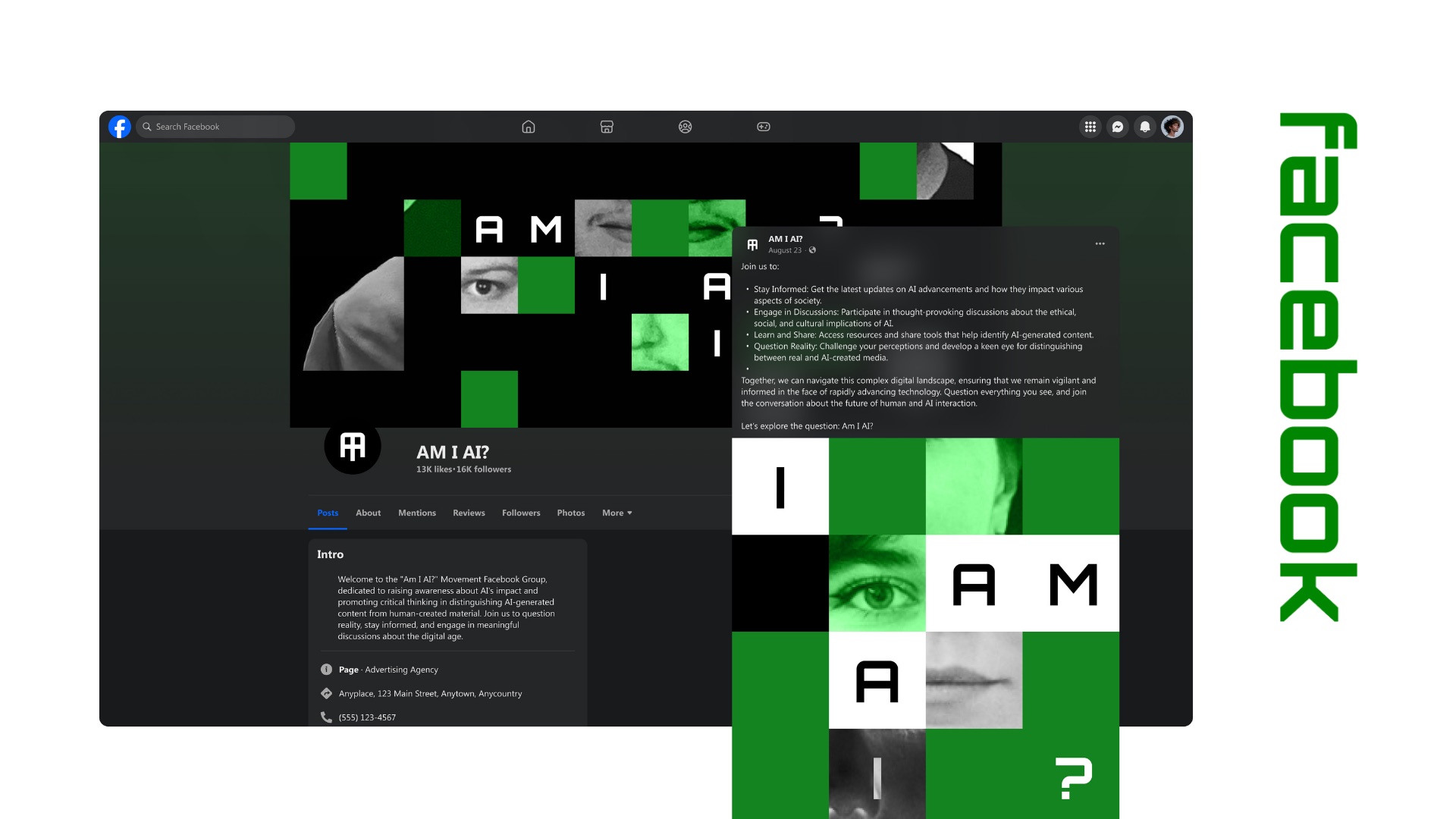
– Motion design for outdoor installations and social media
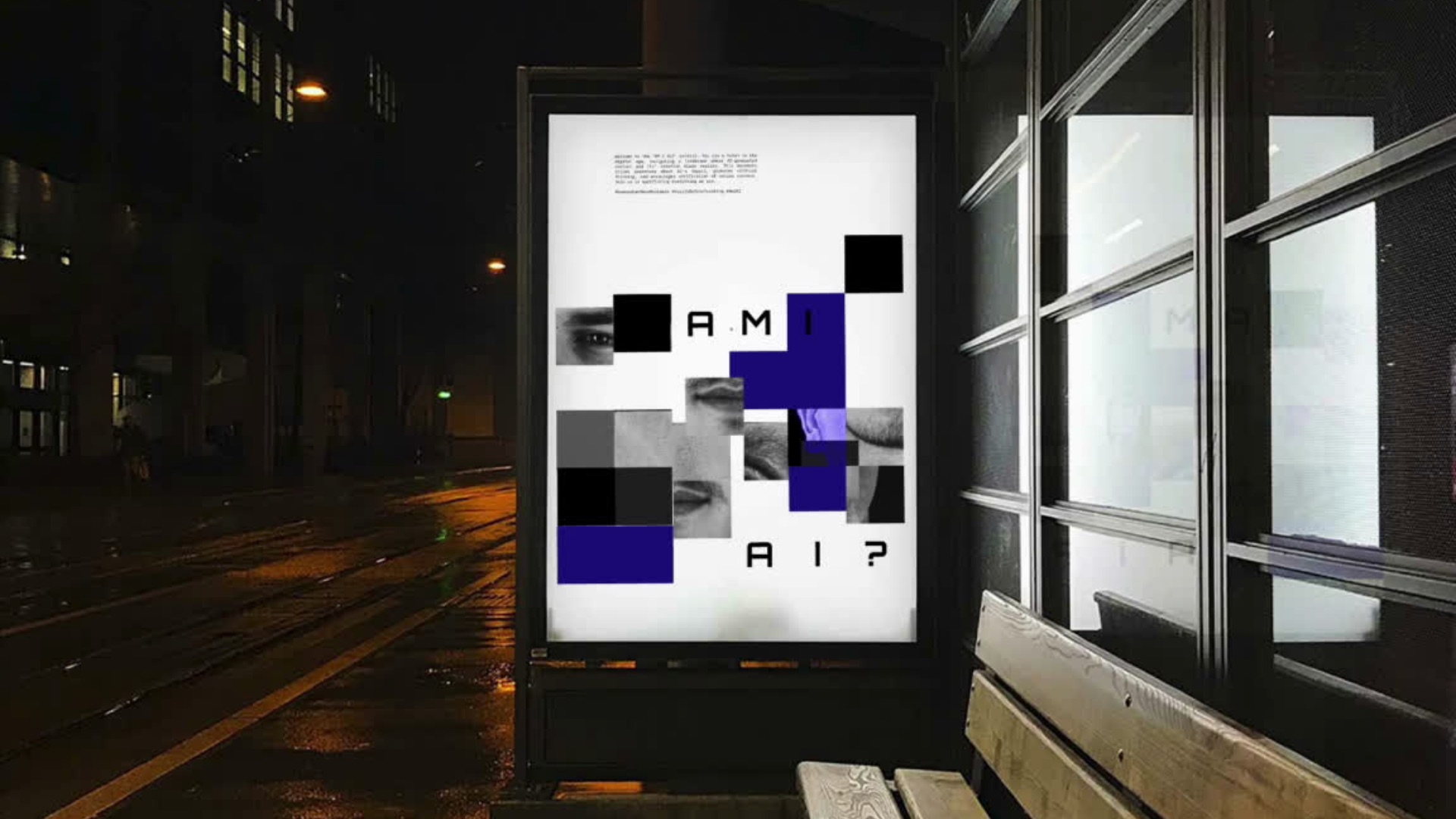
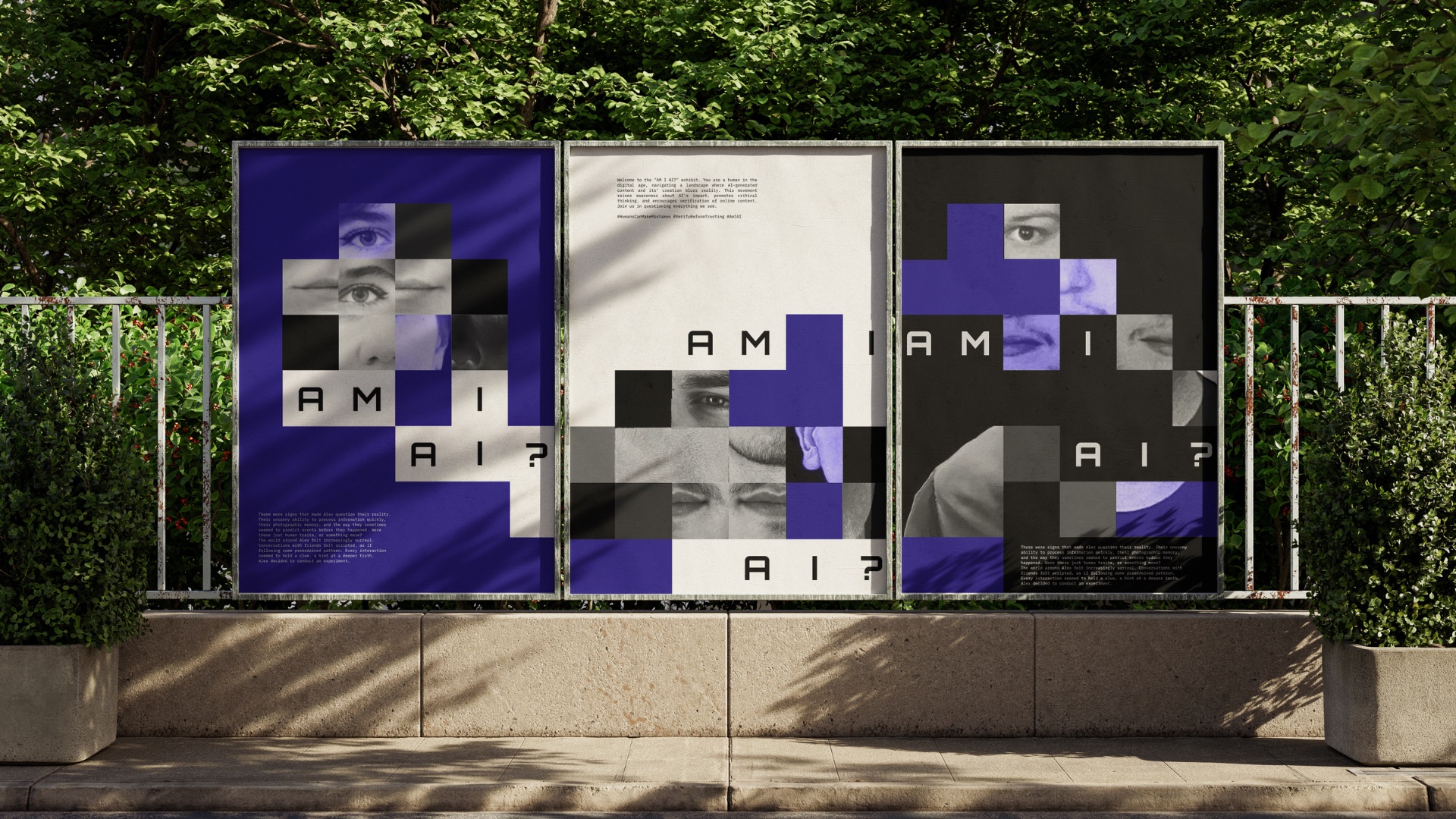
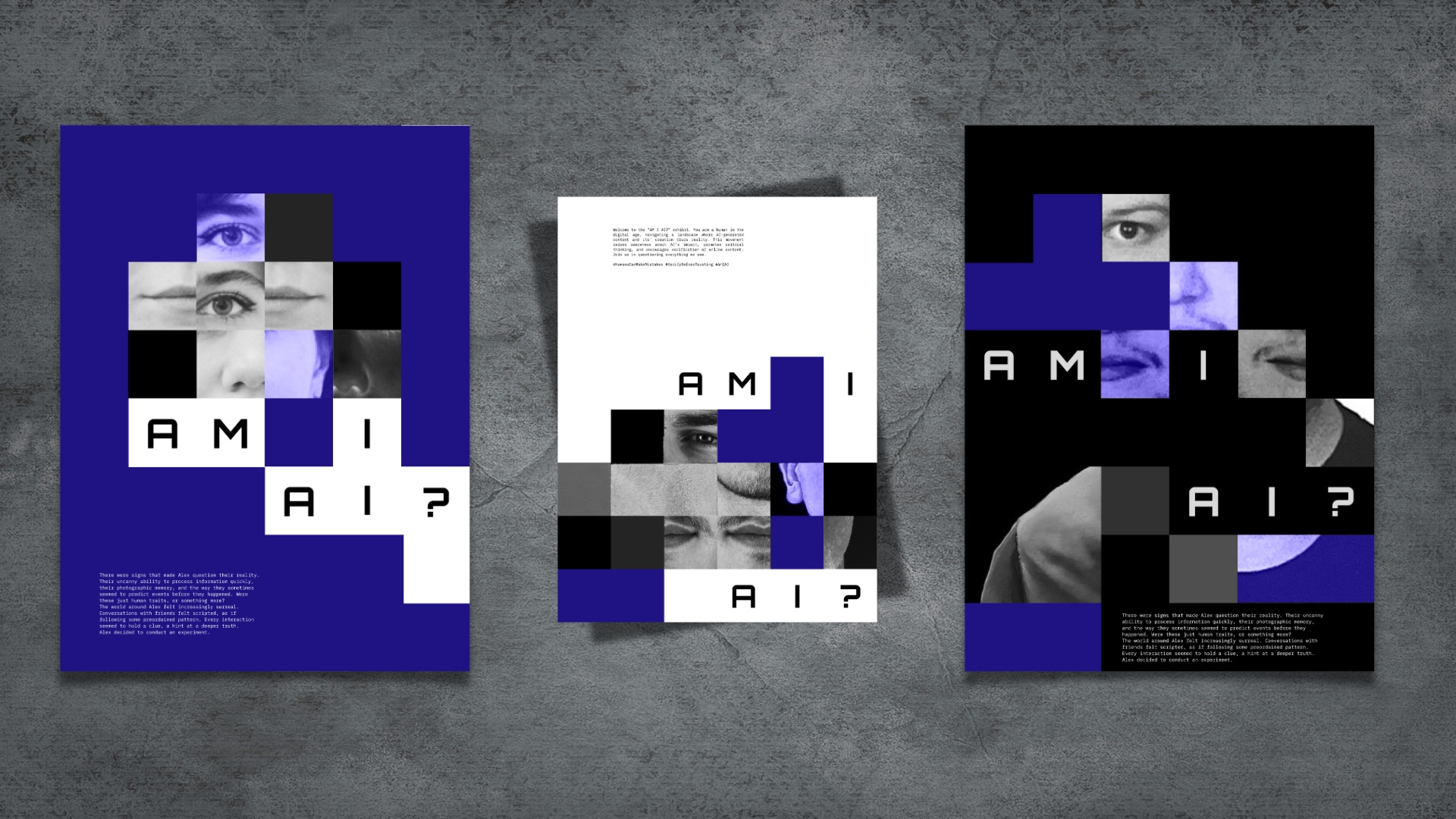
– Main poster design & graphic collateral
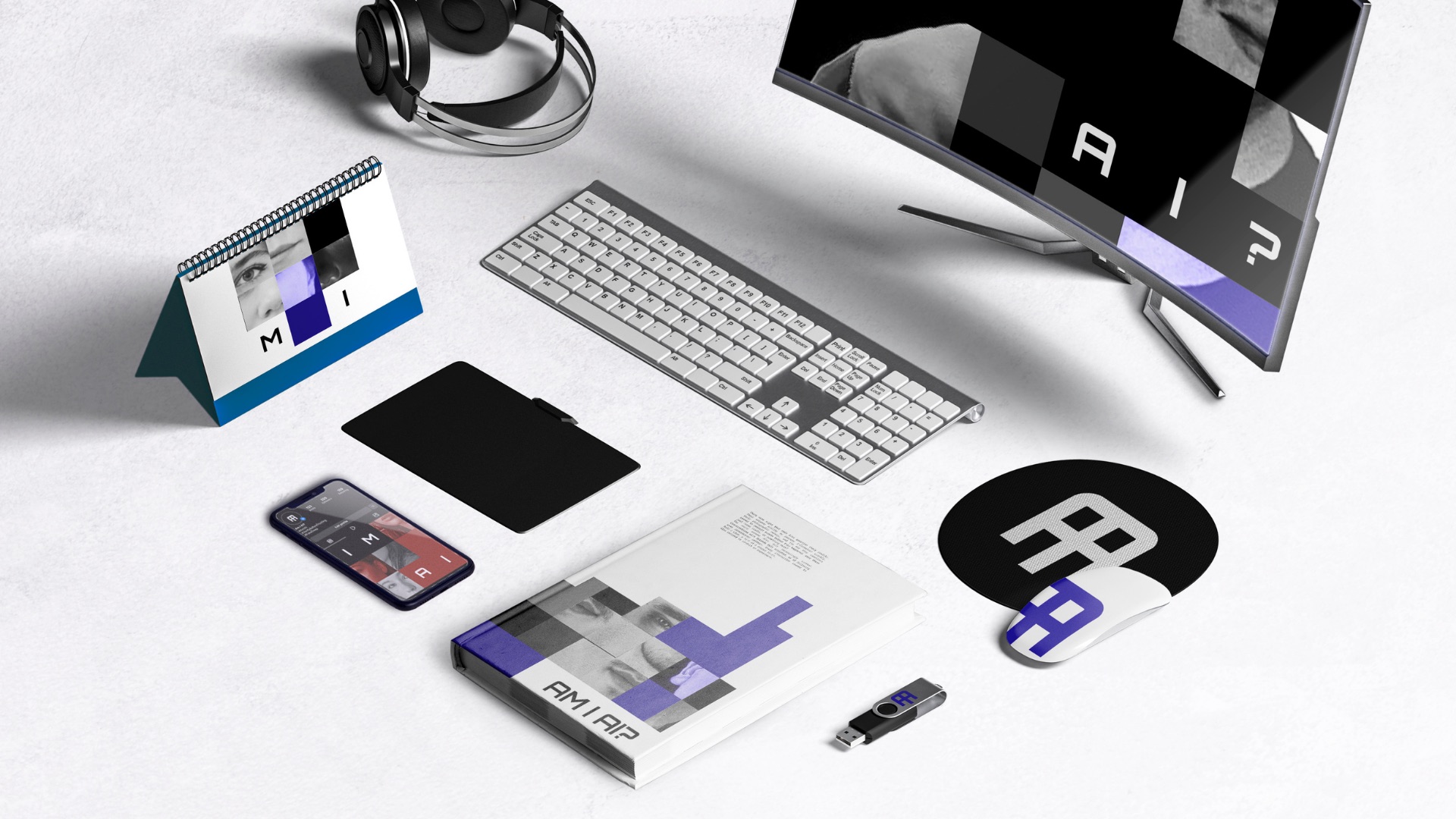
– Merchandise design (apparel, printed matter)
– Presentation at MediaWise YOUth workshop (Erasmus+)
Project overview:
AM I AI? is a speculative design project that confronts the blurred boundaries between human-created and AI-generated content — particularly in the context of fake news and digital misinformation. As generative AI becomes indistinguishable from human authorship, how do we verify authenticity? How do we trust what we see, read, or hear online? Rather than proposing solutions, the project provokes questions through a complete visual world: graphic branding, motion graphics, merchandise, and social media content that intentionally confuses and disorients. The project was developed over a semester by a team of three designers and presented at MediaWise YOUth, an Erasmus+ workshop focused on fake news awareness and digital literacy, held at Sargfabrik Vienna on April 10, 2026.
Design challenge & provocation:
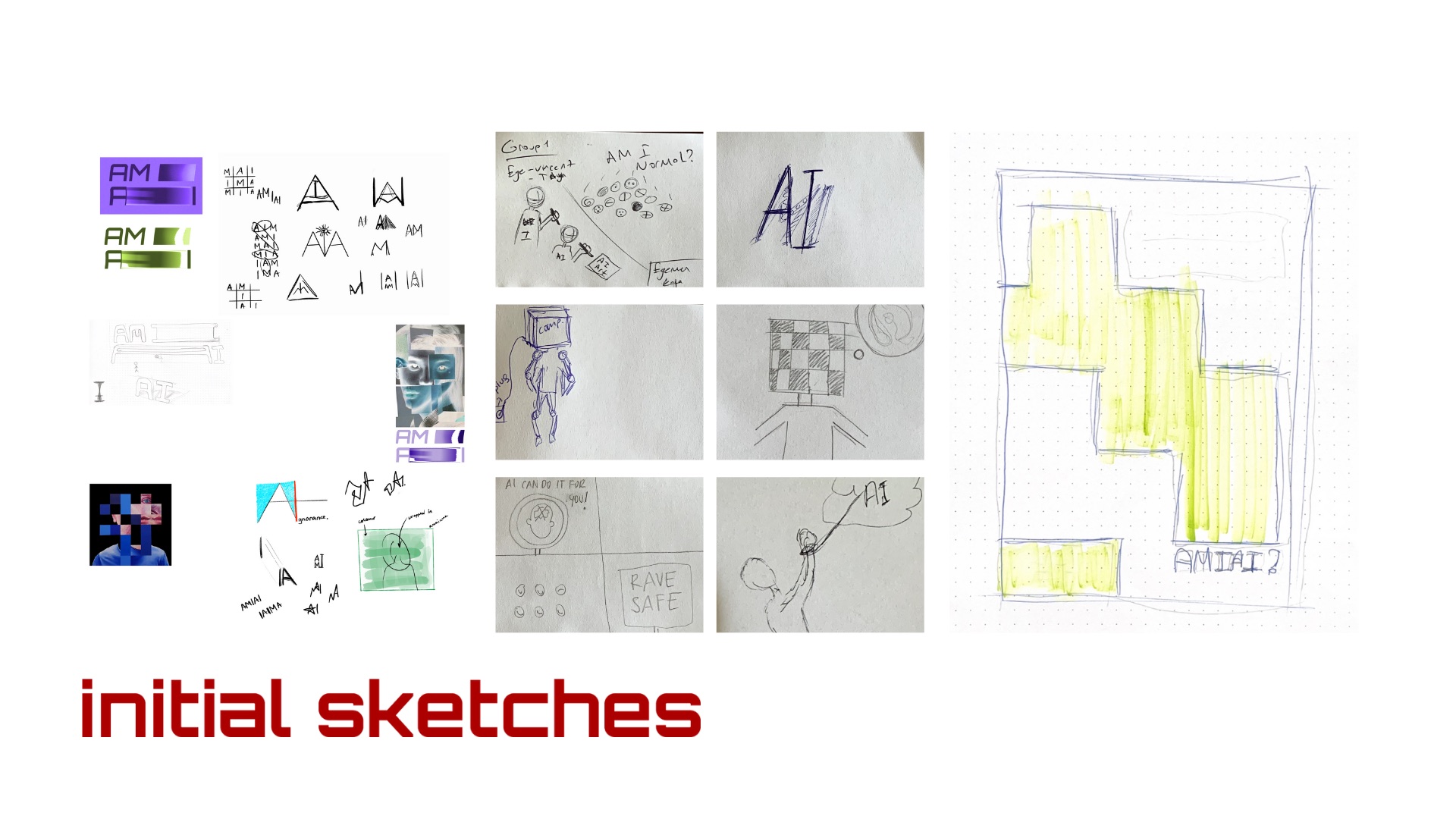
The brief was to create a provocative statement and build a visual world around it, anchored in a pressing contemporary issue. We chose to focus on AI-generated content and fake news — a problem intensifying in real-time as deepfakes, synthetic media, and large language models flood digital spaces with indistinguishable fabrications. The central provocation: What if you couldn't tell whether the content you consume — or even you yourself — is AI-generated? The title 'AM I AI?' poses this question from both sides: as a reader questioning the authenticity of content, and as a self-reflective doubt about one's own humanity in an age where behavior, opinions, and creativity are algorithmically shaped. The challenge was making this abstract, future-facing threat visceral and immediate through design.
Worldbuilding & critical design approach:
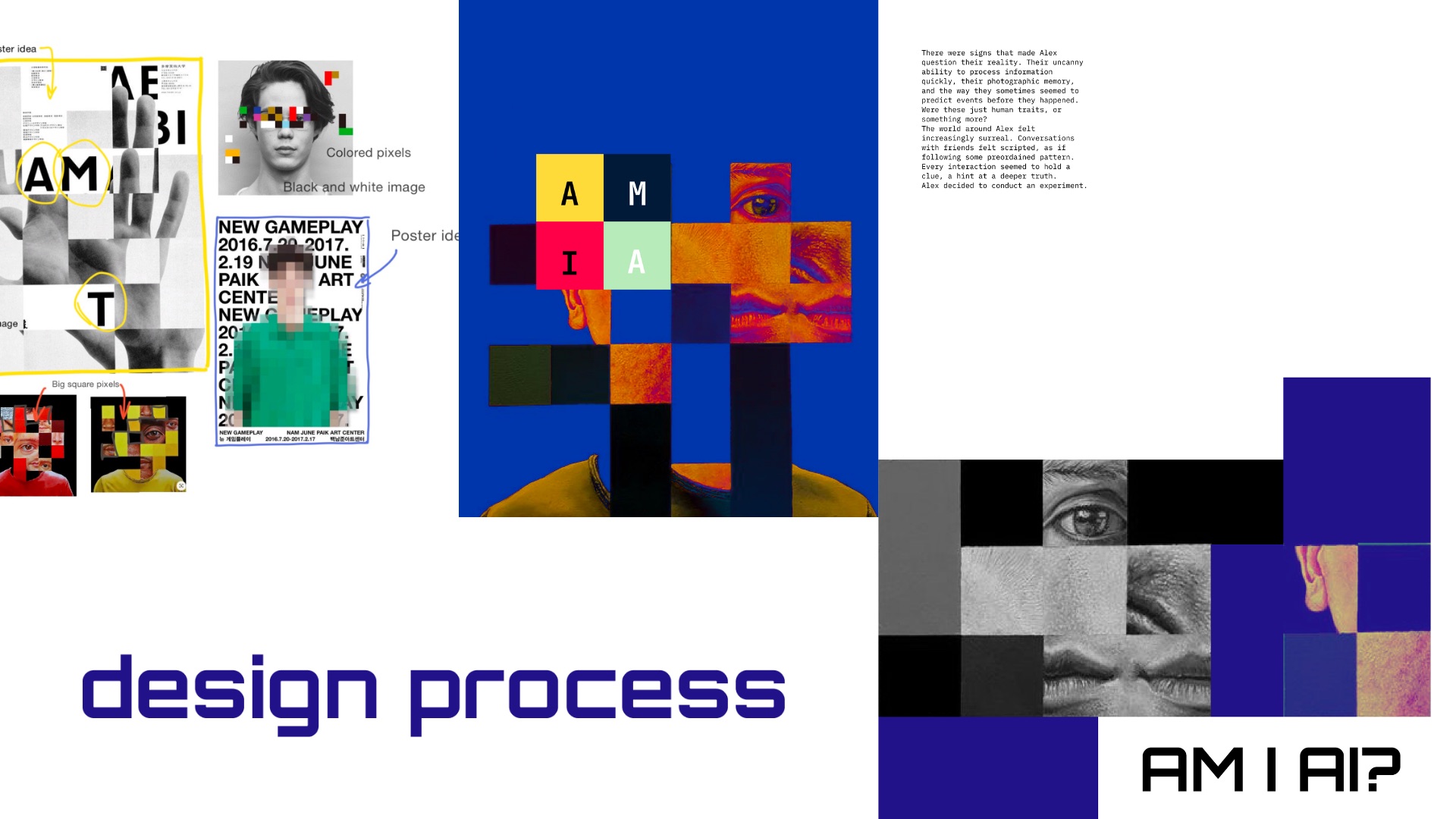
We employed worldbuilding and critical design methodologies to construct a speculative scenario where the line between human and AI authorship has collapsed entirely. Rather than designing a utopian or dystopian future, we created an ambiguous present — a reality that feels unsettlingly close to our own. The visual language intentionally resists clarity: glitchy typography, distorted imagery, and layered textures that suggest both digital corruption and human imperfection. The branding doesn't tell you what's real or fake; it forces you to question, doubt, and scrutinize. This aligns with critical design's goal: not to solve problems, but to provoke reflection and debate about the values embedded in emerging technologies.
Visual identity & branding:
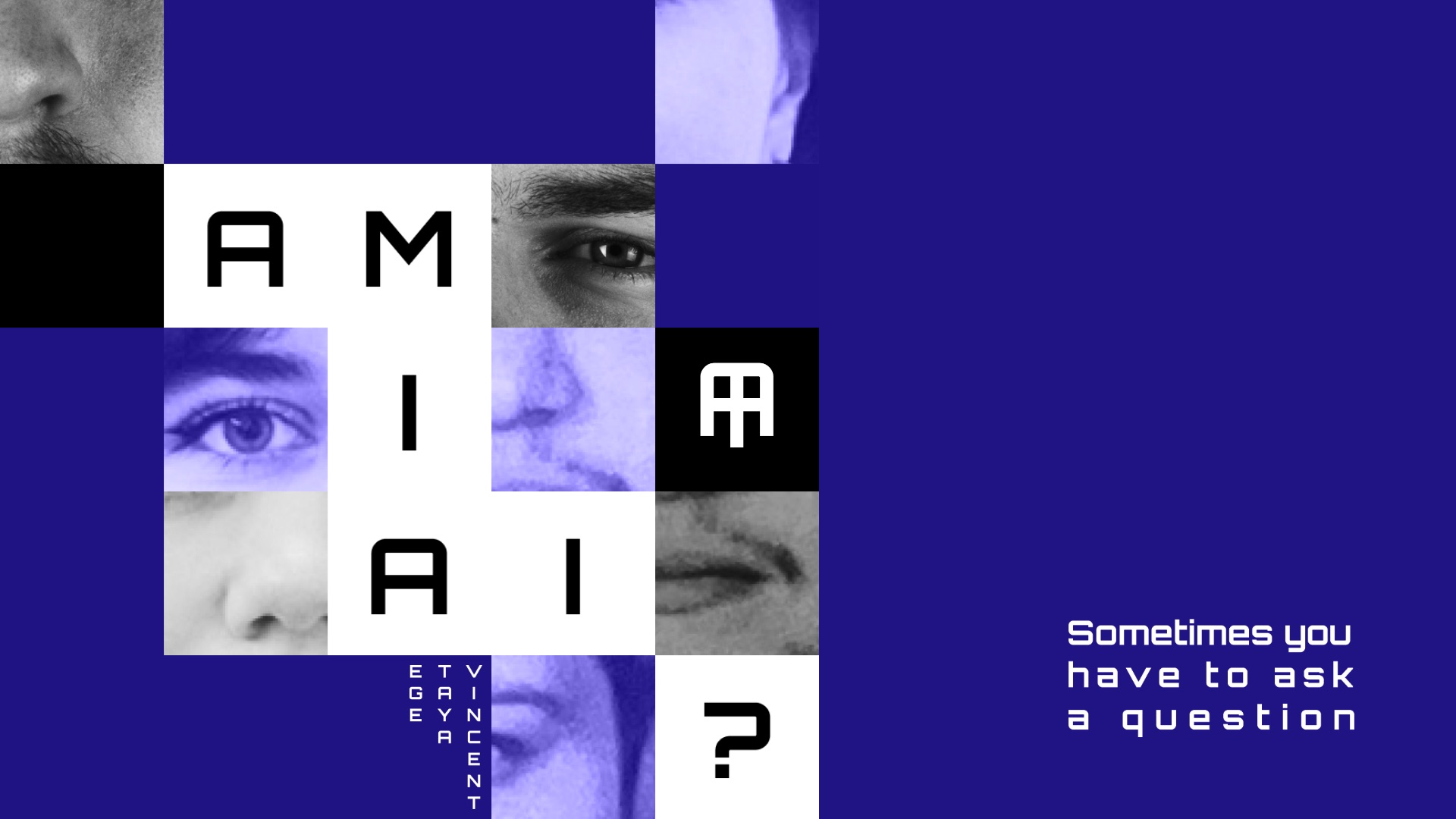
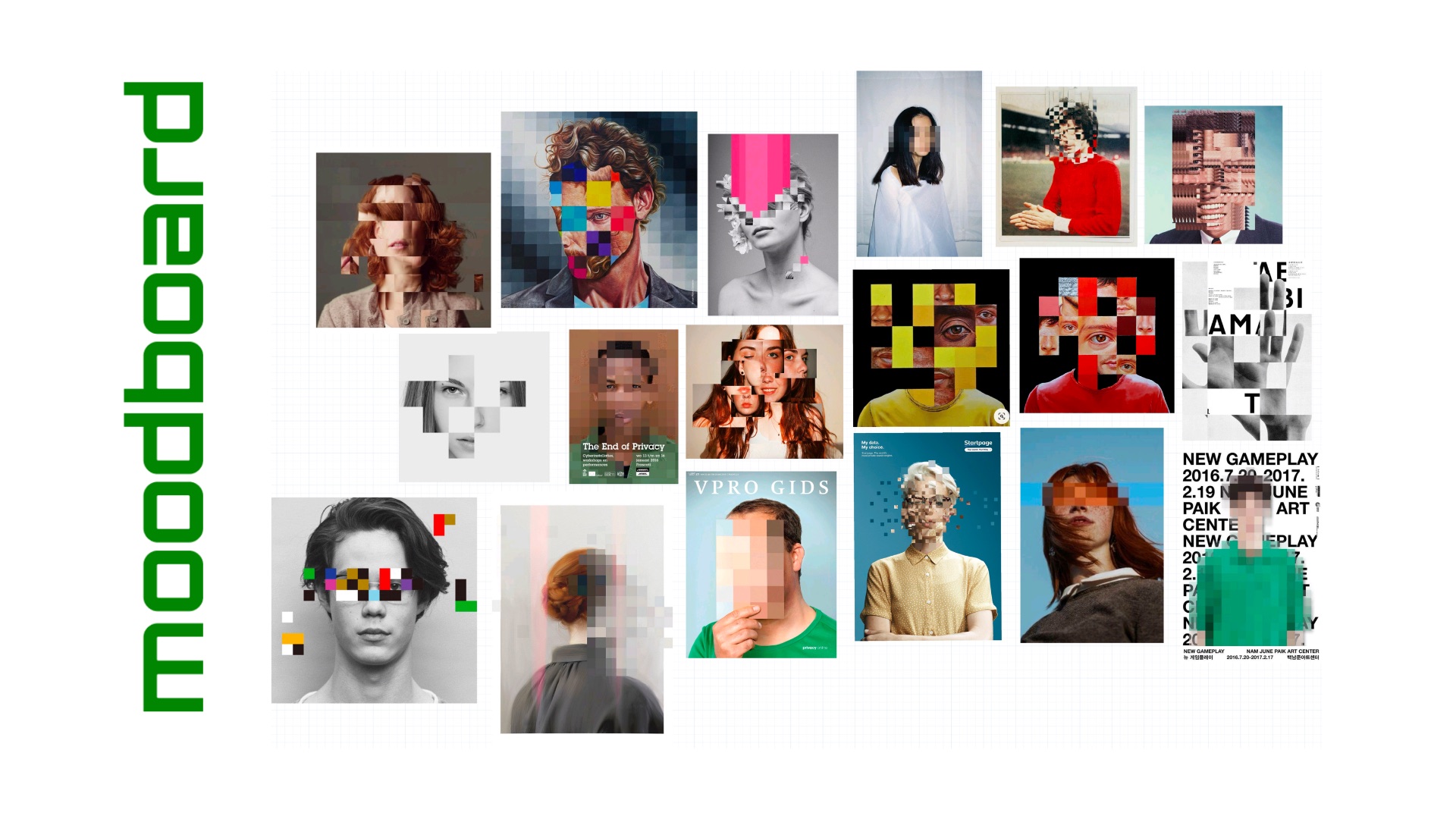
The visual identity centers on contradiction and instability. Typography oscillates between crisp geometric sans-serifs (suggesting algorithmic precision) and distorted, glitchy letterforms (suggesting breakdown and error). The color palette uses high-contrast neons against dark backgrounds — visually arresting but unsettling, evoking both digital interfaces and warning signals. Imagery combines human portraits with digital artifacts: pixelation, compression glitches, layer masks that reveal and conceal. The logo itself is ambiguous — readable as both 'AM I AI' and, when inverted or corrupted, questioning its own legibility. Every design element was crafted to make viewers pause and ask: Is this intentional? Is this broken? Is this real?
Motion design & outdoor installations:
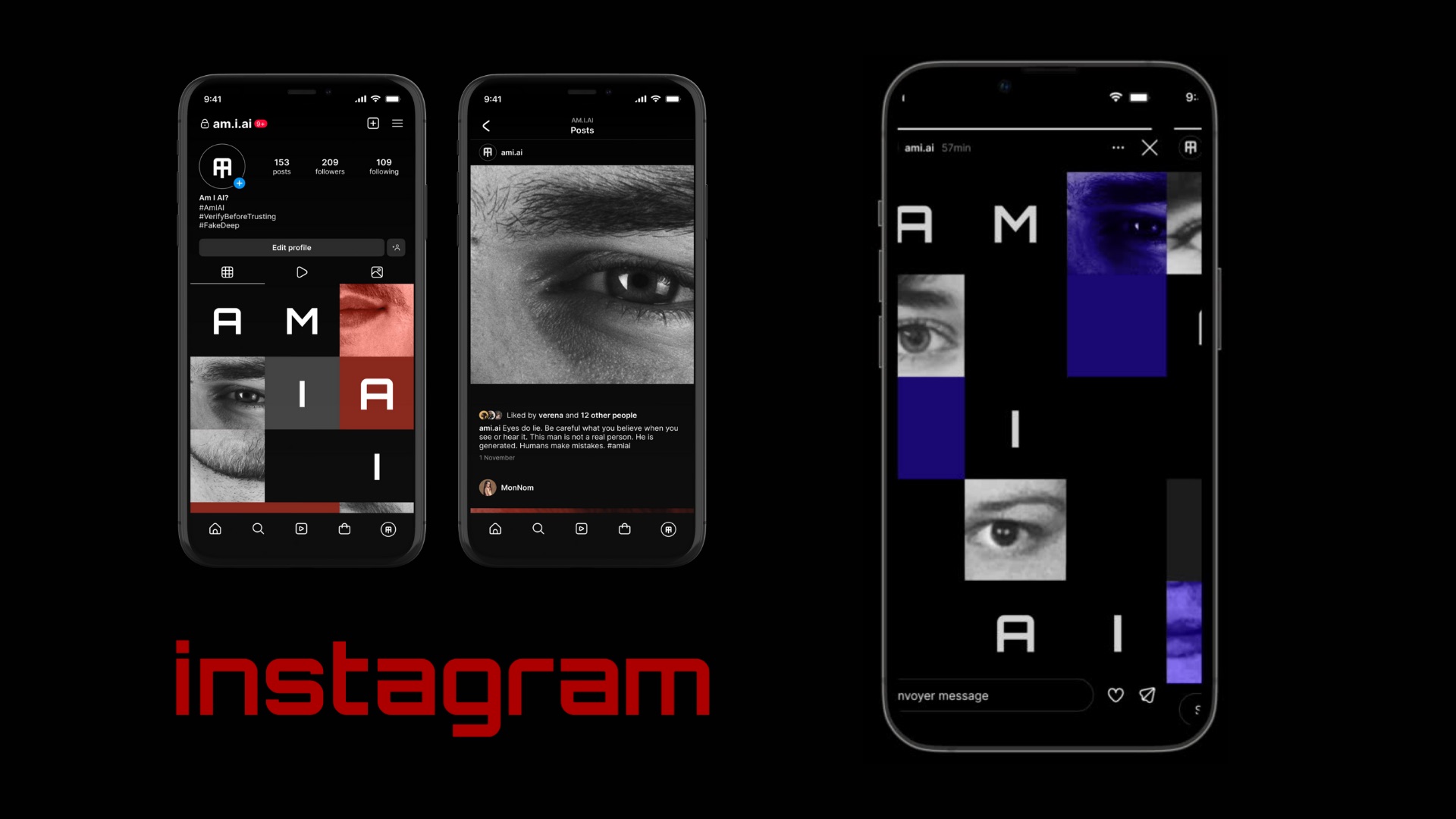
My primary contribution was motion design for outdoor digital displays and social media. The motion graphics use rapid cuts, text overlays, and visual distortion to simulate the experience of scrolling through algorithmically curated feeds where authenticity is unknowable. Phrases like 'Can you tell?', 'Real or Generated?', and 'Trust Your Eyes?' appear and dissolve, layered over fragmented imagery. The pacing is deliberately disorienting — too fast to fully process, mimicking the overwhelming velocity of online information. The outdoor installation footage shows these motion pieces projected in public space, turning digital anxiety into a physical, shared experience. The glitch aesthetic wasn't just stylistic; it was semantic — visual noise representing epistemic uncertainty.
Merchandise & tangible provocations:
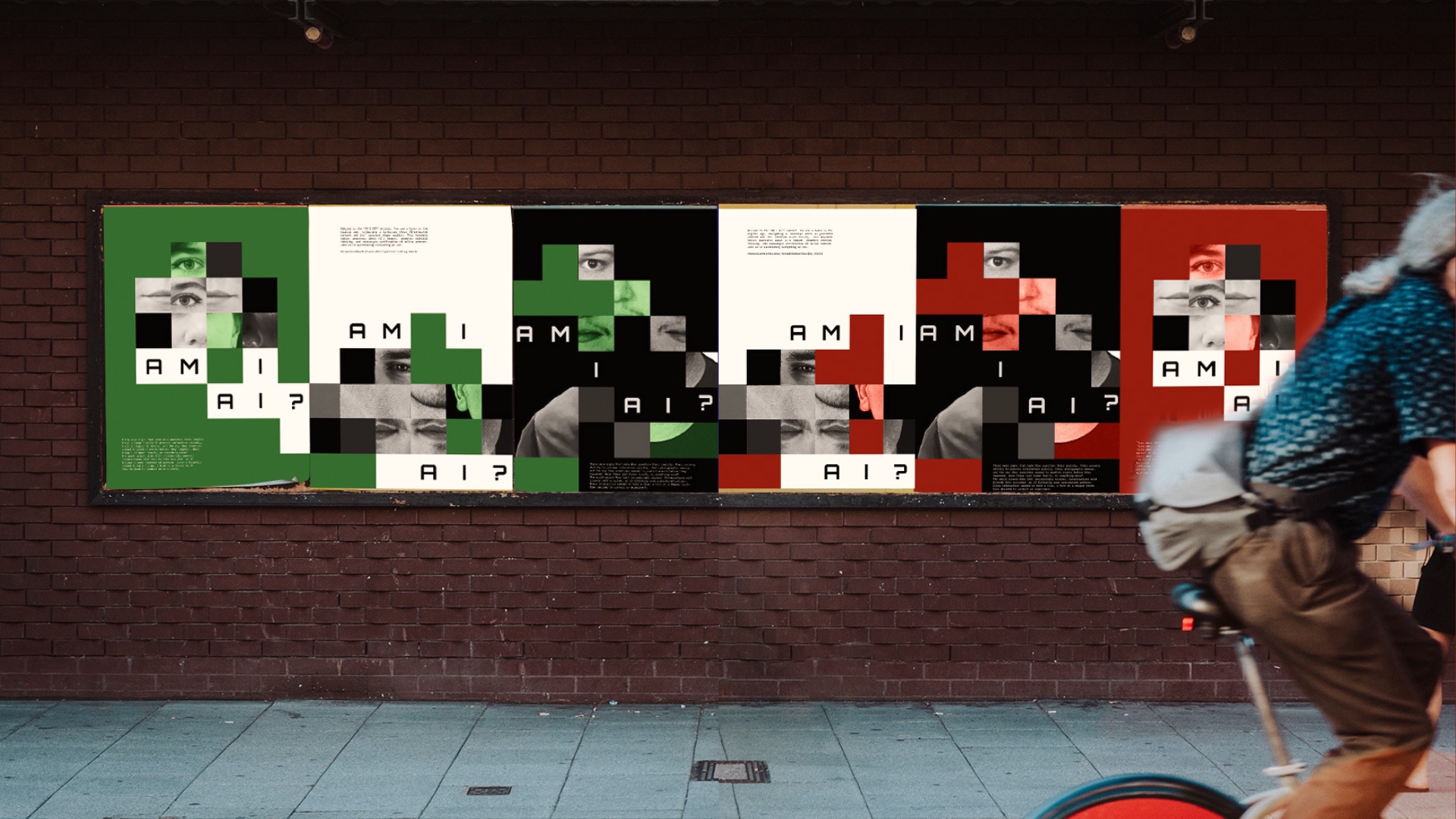
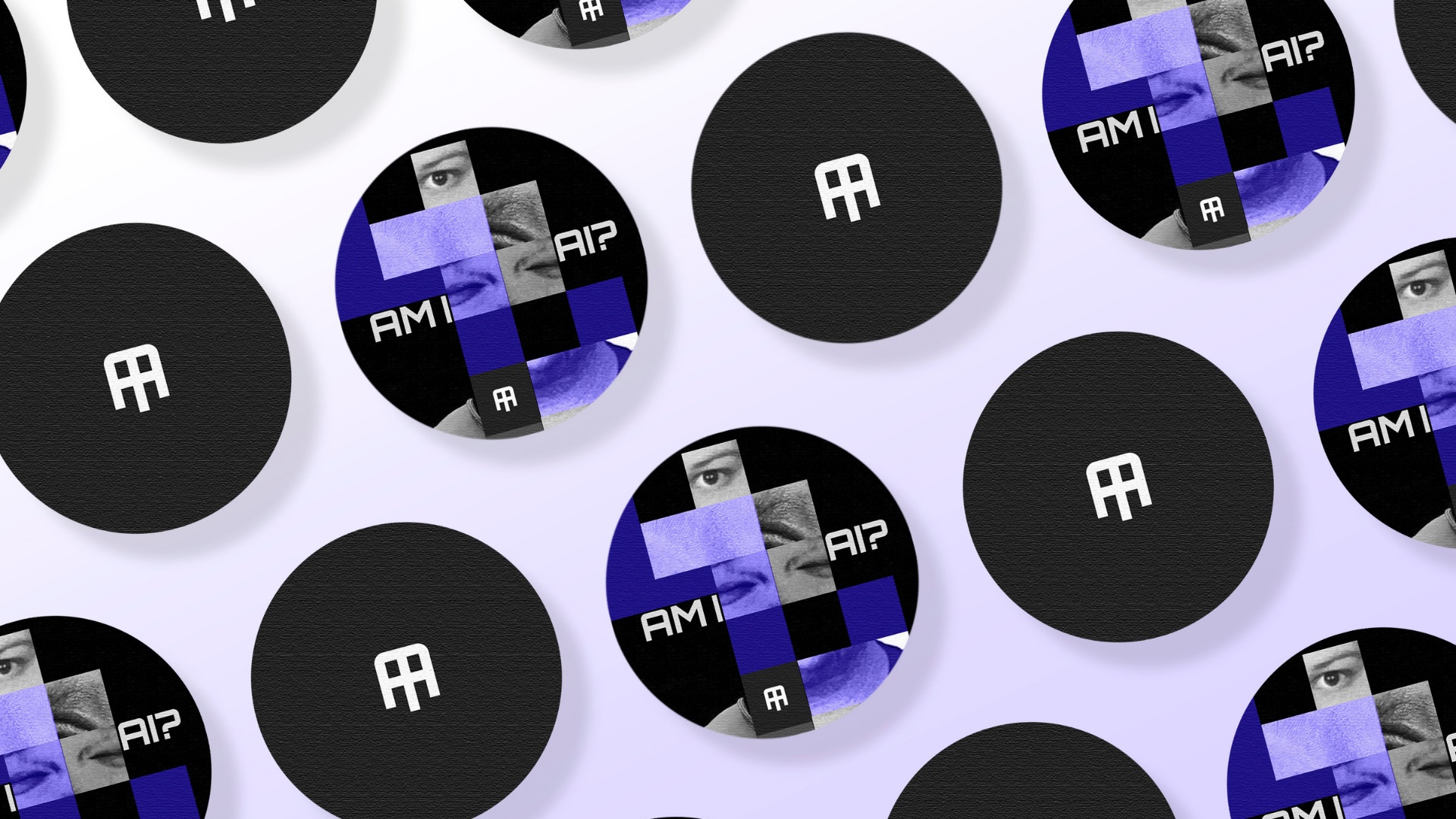
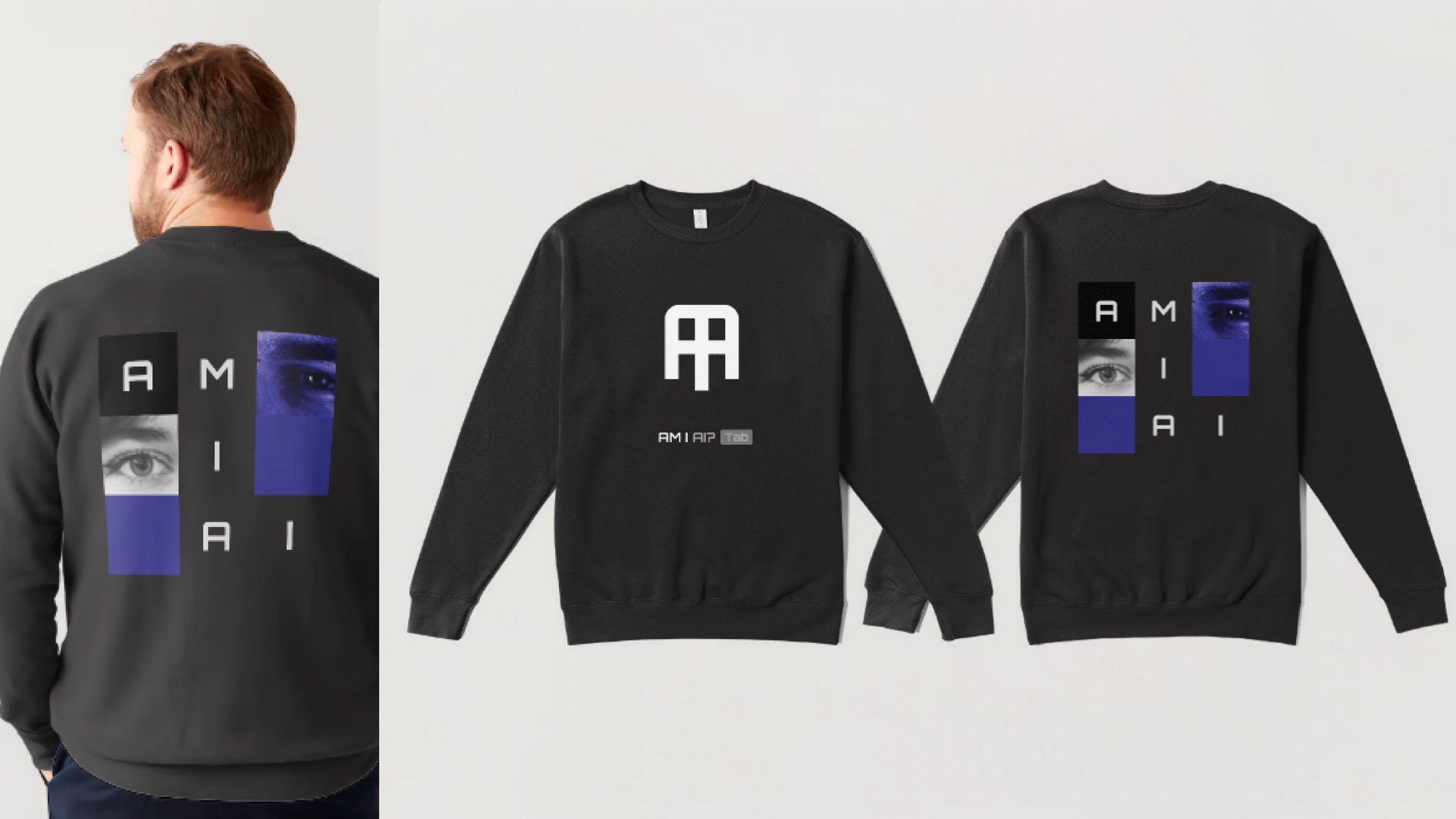
We extended the project into physical merchandise: t-shirts, posters, stickers, and printed matter bearing slogans like 'AM I AI?', 'Generated Content', and 'Authenticity Not Guaranteed.' The merchandise served dual purposes — as artifacts from the speculative world we built, and as conversation starters in real space. Wearing a shirt that asks 'AM I AI?' in public invites questions, skepticism, and dialogue. The printed posters were wheat-pasted in urban environments, blending with advertising and street art, making the provocation ambient rather than gallery-confined. This approach reflects speculative design's aim to infiltrate everyday life rather than remaining in academic or exhibition contexts.
Presentation at MediaWise YOUth:
The project was presented at MediaWise YOUth, an Erasmus+ youth development workshop focused on fake news awareness and digital literacy, held at Sargfabrik Vienna on April 10, 2026. The audience consisted of educators, youth workers, digital literacy advocates, and young people navigating online misinformation. We presented the project as a case study in how design and art can communicate complex digital threats more effectively than informational campaigns or written warnings. The feedback was overwhelmingly positive — attendees praised the project for making abstract AI risks tangible and emotionally resonant. Many noted that the provocative, artistic approach enriched the workshop's content, demonstrating that critical thinking about technology can be cultivated through aesthetic experience, not just factual instruction.
Outcomes & critical reflections:
AM I AI? succeeded in its goal: provoking discomfort and doubt in a way that informational posters or fact-checking guides cannot. The project demonstrated that speculative design can make future-facing threats feel immediate and personal, shifting abstract concerns about AI into visceral questions about trust, identity, and perception. The audience response at MediaWise confirmed that design has a role in digital literacy education — not as instruction, but as provocation that activates critical thinking. However, the project also raised ethical questions: Does ambiguity serve awareness or contribute to cynicism? Can provocation backfire into nihilism? These tensions are productive — speculative design isn't meant to resolve issues, but to open spaces for reflection and debate.
Key insights & broader implications:
The project surfaced several insights about design's role in digital literacy. First, abstraction kills urgency — people intellectually understand AI risks but don't emotionally grasp them until confronted with visceral, confusing experiences. Second, aesthetic discomfort can be pedagogical — feeling uncertain, disoriented, and skeptical while engaging with AM I AI? mirrors the cognitive state required to navigate misinformation online. Third, critical design belongs outside galleries — merchandise, public installations, and social media turn speculative provocations into ambient cultural interventions. Finally, the project revealed the limits of solutions-oriented design: some problems (like epistemic collapse in the age of generative AI) can't be 'solved,' only confronted, questioned, and renegotiated. AM I AI? argues that design's responsibility isn't always answers — sometimes it's better questions.
Next project